


Sports apparel faces harder conditions than everyday clothing, weekly washing, constant stretching, rough handling inside kit bags across long seasons. Print methods behave very differently under that pressure, which explains why teams rarely rely on one technique alone. Clubs arranging t shirt printing for full squads usually mix several processes, matching each garment against whichever one handles it best. Five techniques cover nearly all team apparel produced today, each holding a clear role.
Which methods serve teams?
Five processes dominate squad clothing production, each built around different fabrics, artwork, and quantity demands. Screens handle bulk colour work, sublimation owns synthetic jerseys, vinyl covers personalisation, digital heads manage fine detail, and thread carries club crests. Knowing where each one performs keeps kit decisions quick, since fabric type and order size usually point straight toward the right process before production even begins. Every technique below earns its place through one strength that no other method copies well.
1. Screen printing
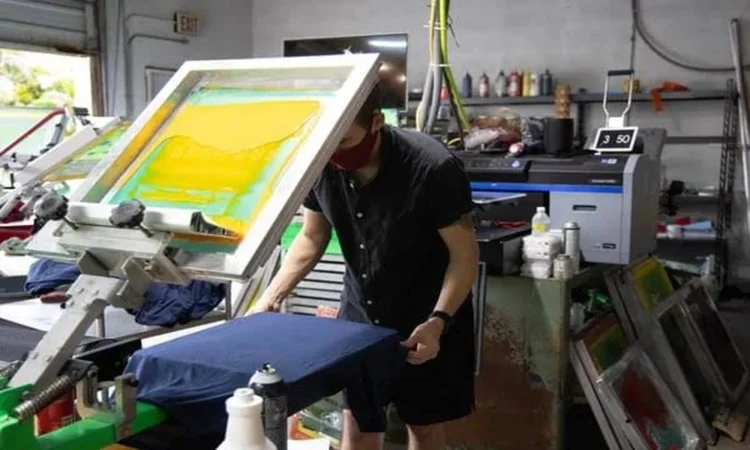
Mesh stencils push plastisol ink onto fabric one colour at a time, building thick layers that stay bright across dark garments. Once screens stand ready, hundreds of shirts match exactly, keeping full squads visually identical. Properly cured plastisol survives beyond fifty washes without cracking, making this the default for complete team orders where colour strength counts most.
2. Sublimation
Heat turns dye into gas, bonding colour straight into synthetic fibre so nothing sits above the surface. Prints never crack or peel since colour lives inside the thread permanently. Gradients wrap entire jerseys, crossing seams cleanly, while fabric keeps full breathability. Polyester content must stay high, and pale base cloth works best because dye cannot brighten dark material.
3. Heat transfer vinyl
Plotters cut letters from coloured sheets, then press bond each piece onto garments individually. Every squad member gets personal lettering without a new setup, and single shirts finish within minutes when rosters change late. Layered sheets build outlined numerals cleanly. Stretch vinyl variants flex during play, avoiding the peeling that older films once suffered.
4. Direct to garment
Digital heads spray water-based ink into cotton-rich fabric, reproducing photographs and gradients no stencil could form. Thin lines and shading print exactly as designed, one-off commemorative pieces need no preparation, and ink absorbs deeply enough that prints barely register against skin. Pace per piece stays slower, keeping this process inside smaller speciality runs.
5. Embroidery
Needles build club badges from thread, stitch by stitch, creating a raised texture that flat ink cannot copy. Stitched marks survive industrial laundering for years while holding shape. Polos, jackets, and caps anchor dense stitching cleanly, though thread density needs matching against fabric weight; puckering pulls lighter cloth inward around design edges.
How do teams combine these?
Single garments often carry several processes together. A match jersey might hold a stitched crest, sublimated base pattern, and vinyl player name at once, each element handled by whichever technique serves it best. Kit managers weigh fabric, quantity, and artwork before splitting work this way.
Each process owns a clear territory across the team clothing. Reading every garment against those strengths keeps full kits performing through an entire season, from the first training session to the final fixture.